If you want your website to appear higher in search results and attract more visitors, working with an SEO agency on page SEO strategy can make a significant difference. Many businesses publish great content but struggle to gain visibility because their pages are not properly structured or optimized.
On-page improvements focus on elements within your website—content quality, page structure, headings, internal links, and user experience. When these elements are handled correctly, search engines understand your pages better and users find the information they need quickly.
In this guide, you will learn how SEO agency on page SEO works, why it matters for website growth, and the most important techniques used by professionals to improve performance and visibility.
Quick Answer
SEO agency on page SEO refers to the process where a professional agency improves the elements within a website’s pages—such as content structure, headings, internal links, images, and page experience—to help the site perform better in search results and provide a better user experience.
Table of Contents
- What SEO Agency On Page SEO Means
- Why On Page Improvements Matter for Websites
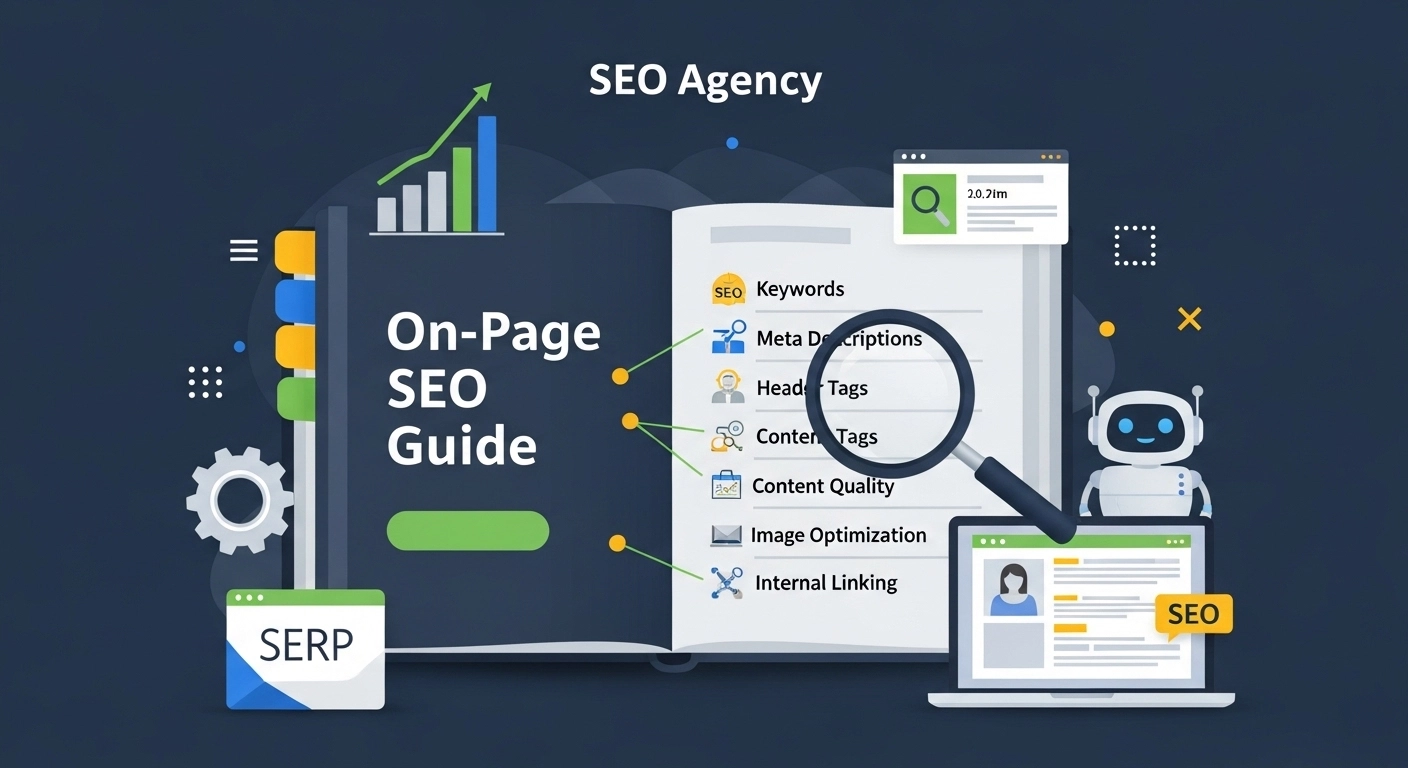
- Key Elements of SEO Agency On Page SEO
- Content Structure and Page Layout
- Title Tags and Meta Descriptions
- URL Structure and Navigation
- Internal Linking Strategy
- Image and Media Improvements
- Page Speed and Mobile Experience
- How an SEO Agency Performs On Page Improvements
- Common On Page Mistakes to Avoid
- FAQ
- Conclusion
What SEO Agency On Page SEO Means
SEO agency on page SEO focuses on improving the elements that exist directly on your website pages. These elements help both search engines and visitors understand your content.
An agency typically analyzes your website and improves areas such as:
- Page titles and headings
- Content structure
- Internal links
- Image descriptions
- URL structure
- Page speed and usability
The goal is simple: make each page easier to understand, navigate, and rank well in search results.
Why On Page Improvements Matter for Websites
Many websites struggle with traffic because their pages are not structured correctly. Even excellent content may remain hidden if search engines cannot interpret it properly.
Effective SEO agency on page SEO helps in several ways:
Better Visibility
Well-structured pages are easier for search engines to understand and index.
Improved User Experience
Visitors stay longer when content is organized clearly and loads quickly.
Higher Engagement
Clear headings, internal links, and structured content encourage readers to explore more pages.
More Organic Traffic
When pages perform better in search results, they naturally attract more visitors.
Key Elements of SEO Agency On Page SEO
Professional agencies usually focus on several critical areas when improving a website.
1. High-Quality Content
Content is the foundation of any successful website page. Each page should provide helpful and relevant information.
Important factors include:
- Clear topic focus
- Simple language
- Useful explanations
- Logical structure
Well-written content answers the reader’s questions directly and keeps them engaged.
2. Heading Structure
Headings organize information and help readers scan a page easily.
Typical structure includes:
- H1 for the main page title
- H2 for major sections
- H3 for subtopics
This structure makes content easier to understand for both readers and search engines.
3. Title Tags and Meta Descriptions
Page titles and descriptions are often the first things people see in search results.
A strong title should:
- Clearly explain the page topic
- Encourage users to click
- Stay concise and readable
Meta descriptions should summarize the page content and invite readers to learn more.
Content Structure and Page Layout
Clear structure plays a major role in SEO agency on page SEO.
Visitors rarely read every word. Instead, they scan pages quickly. Structured layouts help them find information faster.
Best Practices
- Use short paragraphs
- Add subheadings frequently
- Include bullet points for lists
- Highlight important information
For example, a guide about digital marketing may include sections like strategies, tools, and case examples. This structure keeps readers engaged.
URL Structure and Navigation
Simple and descriptive URLs help both users and search engines understand page topics.
Example
Poor URL
example.com/page123?id=45
Better URL
example.com/on-page-seo-guide
A good structure:
- Uses readable words
- Avoids unnecessary numbers
- Clearly reflects page content
Navigation menus should also be clear and organized so visitors can easily find information.
Internal Linking Strategy
Internal links connect pages within your website. They guide readers to related content and help search engines explore your site.
Effective internal linking helps:
- Improve page discovery
- Increase time spent on the site
- Strengthen topic relevance
For example, a blog post about website traffic might link to related articles about content strategy or keyword research.
Image and Media Improvements
Images make content more engaging, but they also need proper descriptions.
Important practices include:
- Adding descriptive image names
- Including alt text
- Compressing images for faster loading
These steps improve accessibility and help search engines understand visual content.
Page Speed and Mobile Experience
Website performance is a major part of SEO agency on page SEO.
Slow pages frustrate visitors and often cause them to leave quickly.
Ways to improve page performance
- Reduce large image sizes
- Use faster hosting services
- Minimize unnecessary scripts
- Enable browser caching
Mobile experience is equally important because most users browse websites on smartphones.
Responsive design ensures pages display properly on all devices.
How an SEO Agency Performs On Page Improvements
Professional agencies usually follow a systematic process when improving a website.
Step 1: Website Analysis
They review the entire website to identify structural problems, content gaps, and performance issues.
Step 2: Page Structure Improvements
This includes improving headings, titles, and page layouts.
Step 3: Content Enhancements
Existing pages may be expanded, reorganized, or clarified to provide better value to readers.
Step 4: Technical Adjustments
Agencies fix elements like slow loading pages, broken links, or confusing navigation.
Step 5: Continuous Monitoring
After improvements are made, performance is monitored and pages are updated when necessary.
Common On Page Mistakes to Avoid
Many websites unknowingly make mistakes that reduce their visibility.
1. Weak Page Titles
Generic titles make it difficult for users and search engines to understand page topics.
2. Poor Content Organization
Large blocks of text discourage readers from staying on the page.
3. Slow Page Loading
Heavy images and unnecessary scripts can significantly slow down websites.
4. Missing Internal Links
Without internal links, visitors may leave after viewing only one page.
5. Duplicate Content
Repeating the same information across multiple pages confuses search engines.
Avoiding these issues improves overall website performance.
FAQ
What does SEO agency on page SEO include?
It typically includes improving page titles, headings, content structure, internal links, images, URLs, and overall user experience within a website.
How long does it take to see results?
Results can vary depending on website size, competition, and current page quality. Improvements usually appear gradually over several weeks or months.
Is on page improvement enough for better rankings?
While on page work is essential, websites often benefit from a broader strategy that includes content development and link building.
Can small businesses benefit from SEO agency on page SEO?
Yes. Small businesses often gain significant improvements because many websites initially lack proper page structure and content organization.
Should every page be improved?
Ideally, yes. Each important page should have clear structure, helpful content, and strong user experience to perform well in search results.
Conclusion
Improving a website requires more than simply publishing content. A well-structured page helps visitors understand information quickly and allows search engines to interpret content more effectively.
That is why SEO agency on page SEO plays such an important role in website growth. By refining content structure, improving navigation, enhancing page speed, and organizing information clearly, businesses can significantly increase their visibility and user engagement.
When these elements work together, websites become easier to discover, more enjoyable to explore, and far more effective at attracting consistent organic traffic.

Known as the “Father of American Literature,” Mark Twain was a humorist, novelist, and travel writer. His famous works include The Adventures of Tom Sawyer and Adventures of Huckleberry Finn. Twain’s witty storytelling and sharp satire make his quotes perfect for clever and funny captions.