
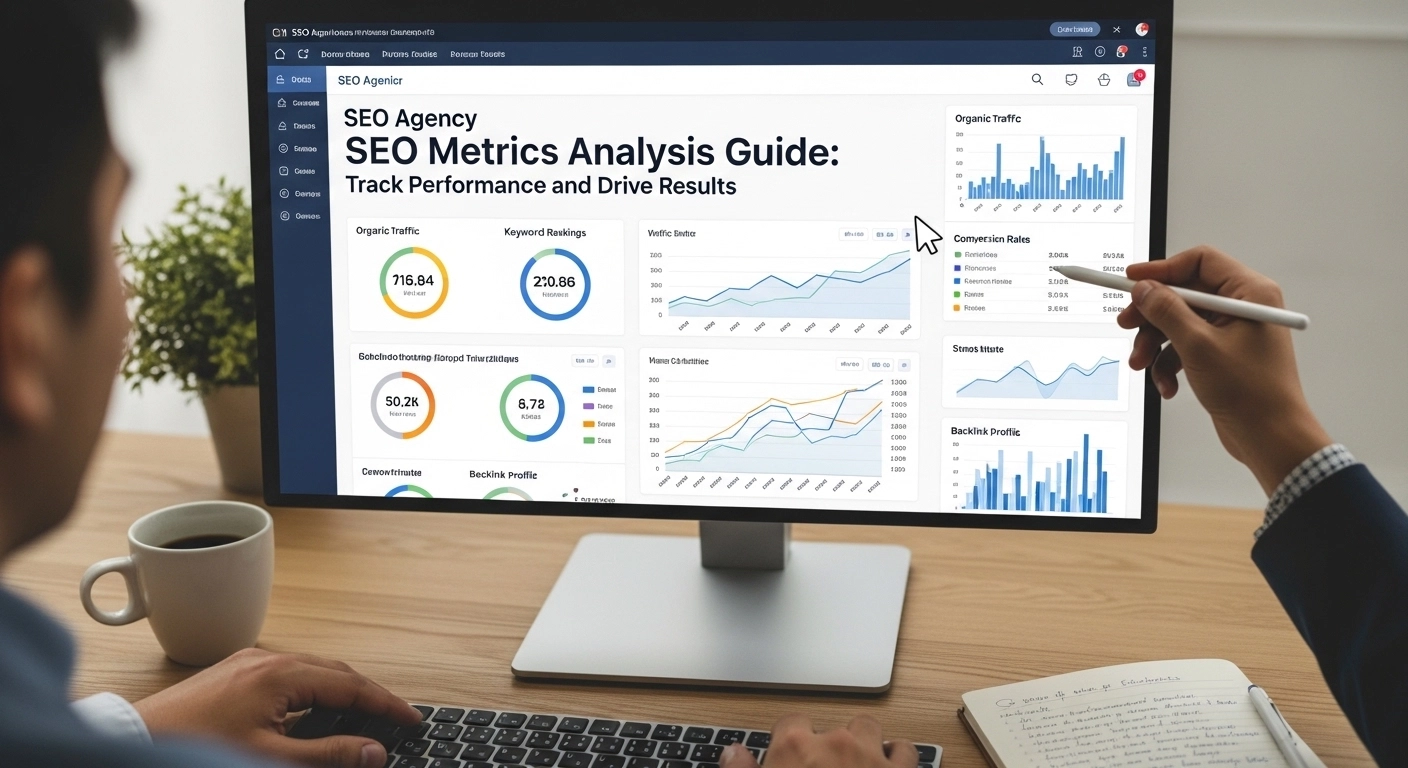
Understanding performance is the foundation of growth, and that’s where SEO agency SEO metrics analysis plays a critical role. Without proper analysis, even the best campaigns can lose direction. Agencies and business owners need clear, meaningful data to evaluate progress, identify opportunities, and make informed decisions.
This guide will walk you through everything you need to know about analyzing key metrics effectively. From traffic and rankings to conversions and technical health, you’ll learn how to interpret data and turn it into real-world results.
Quick Answer
SEO agency SEO metrics analysis is the process of collecting, evaluating, and interpreting performance data such as traffic, rankings, and conversions to measure success and guide future strategy.
Table of Contents
- What Is SEO Agency SEO Metrics Analysis
- Why Metrics Analysis Matters
- Core Metrics Every Agency Should Track
- Traffic Analysis Explained
- Keyword and Ranking Analysis
- Conversion and Revenue Tracking
- Technical Performance Metrics
- How to Analyze Metrics Step by Step
- Common Mistakes to Avoid
- Practical Tips for Better Analysis
- FAQ Section
- Conclusion
What Is SEO Agency SEO Metrics Analysis?
SEO agency SEO metrics analysis involves reviewing performance data to understand how a website is performing in search results and how users interact with it.
It goes beyond simply collecting data. The goal is to:
- Identify trends
- Measure progress
- Spot issues early
- Improve decision-making
Good analysis answers key questions like:
- Are we getting more visitors?
- Are rankings improving?
- Is traffic converting into leads or sales?
Why Metrics Analysis Matters
1. Provides Clear Direction
Without analysis, decisions are based on guesswork. Metrics give you a clear path forward.
2. Measures Real Performance
It helps you understand whether your efforts are producing actual results.
3. Identifies Opportunities
You can discover:
- High-performing pages to expand
- Keywords with growth potential
- Underperforming areas that need improvement
4. Improves Client Communication
Clear data makes it easier to explain progress and results.
Core Metrics Every Agency Should Track
Not all metrics are equally important. Focus on those that directly impact growth and business outcomes.
1. Organic Traffic
This shows how many visitors come from search engines.
Key insights include:
- Growth trends over time
- Top-performing pages
- Traffic sources
2. Keyword Rankings
Tracking rankings helps measure visibility.
Important factors:
- Position changes
- New keywords entering results
- Keywords close to top positions
3. Click-Through Rate (CTR)
CTR shows how often users click on your listing.
A low CTR may indicate:
- Weak titles
- Unclear descriptions
- Poor relevance
4. Conversions
Conversions are the most valuable metric.
Examples include:
- Form submissions
- Product purchases
- Email signups
5. Backlinks
Backlinks indicate authority and trust.
Focus on:
- Number of referring domains
- Link quality
- Growth over time
6. Bounce Rate and Engagement
These metrics show user behavior.
High bounce rates may mean:
- Poor content relevance
- Slow loading pages
- Weak user experience
Traffic Analysis Explained
Traffic analysis is the starting point of SEO agency SEO metrics analysis.
What to Look For
- Total traffic growth
- Traffic by device (mobile vs desktop)
- Traffic by location
- Traffic by page
Example
If traffic increases but conversions stay the same, it may indicate:
- Irrelevant visitors
- Weak calls to action
- Poor landing pages
Keyword and Ranking Analysis
Keyword performance reveals how visible your website is.
Key Areas to Analyze
- Keywords ranking on page 1
- Keywords ranking on page 2 (quick wins)
- Ranking fluctuations
- Competitor comparison
Practical Insight
If a keyword is ranking in position 8, improving content quality or internal linking can push it into the top 3 positions, leading to more clicks.
Conversion and Revenue Tracking
Traffic alone doesn’t guarantee success. Conversions show real value.
What to Track
- Conversion rate
- Cost per conversion
- Revenue generated
- Conversion sources
Example
A page with lower traffic but higher conversions may be more valuable than a high-traffic page with no conversions.
Technical Performance Metrics
Technical performance directly affects visibility and user experience.
Key Technical Metrics
- Page speed
- Mobile usability
- Crawl errors
- Indexing status
Why It Matters
Even strong content can underperform if technical issues exist.
How to Analyze Metrics Step by Step
Step 1: Set Clear Goals
Define what success looks like:
- More traffic
- More leads
- Higher sales
Step 2: Collect Data
Use reliable tools to gather accurate data from multiple sources.
Step 3: Identify Trends
Look for patterns over time:
- Growth trends
- Seasonal changes
- Sudden drops or spikes
Step 4: Compare Performance
Use comparisons to gain better insights:
- Month vs month
- Year vs year
Step 5: Draw Insights
Turn data into actionable conclusions.
Example:
“Traffic dropped due to ranking loss on key pages.”
Step 6: Take Action
Every analysis should lead to action, such as:
- Updating content
- Improving user experience
- Building stronger backlinks
Common Mistakes to Avoid
1. Focusing on Vanity Metrics
Metrics like impressions alone don’t show real value.
2. Ignoring Conversions
Traffic without conversions does not drive business growth.
3. Overcomplicating Data
Too much data can overwhelm decision-making.
4. Not Tracking Trends
Looking at data without context can lead to wrong conclusions.
5. Lack of Consistency
Irregular analysis makes it hard to measure progress.
Practical Tips for Better Analysis
1. Focus on What Matters Most
Prioritize metrics that impact business goals.
2. Use Visual Reports
Charts and graphs make data easier to understand.
3. Combine Multiple Metrics
Don’t rely on a single metric. Use a combination for better insights.
4. Review Data Regularly
Consistent analysis helps identify issues early.
5. Align Metrics with Goals
Always connect performance data with business objectives.
FAQ Section
1. What is SEO agency SEO metrics analysis?
It is the process of evaluating key performance data to measure progress and improve results.
2. Which metrics are most important?
Organic traffic, keyword rankings, conversions, backlinks, and engagement metrics are the most important.
3. How often should metrics be analyzed?
Weekly reviews help track short-term changes, while monthly analysis provides a broader view.
4. Why are conversions important in analysis?
Conversions show the actual value of traffic and indicate business success.
5. Can I rely on a single metric?
No. A combination of metrics provides a more accurate understanding of performance.
Conclusion
Effective SEO agency SEO metrics analysis is essential for understanding performance and driving meaningful growth. By focusing on the right metrics, analyzing trends, and turning insights into action, agencies and businesses can make smarter decisions and achieve better results.
The key is not just collecting data, but interpreting it correctly and using it to guide future strategy. When done properly, metrics analysis becomes a powerful tool for long-term success.

A poet, memoirist, and civil rights activist, Maya Angelou inspired millions through works like I Know Why the Caged Bird Sings. Her words emphasize strength, self-love, and resilience. Angelou’s empowering quotes are perfect for motivational captions.