
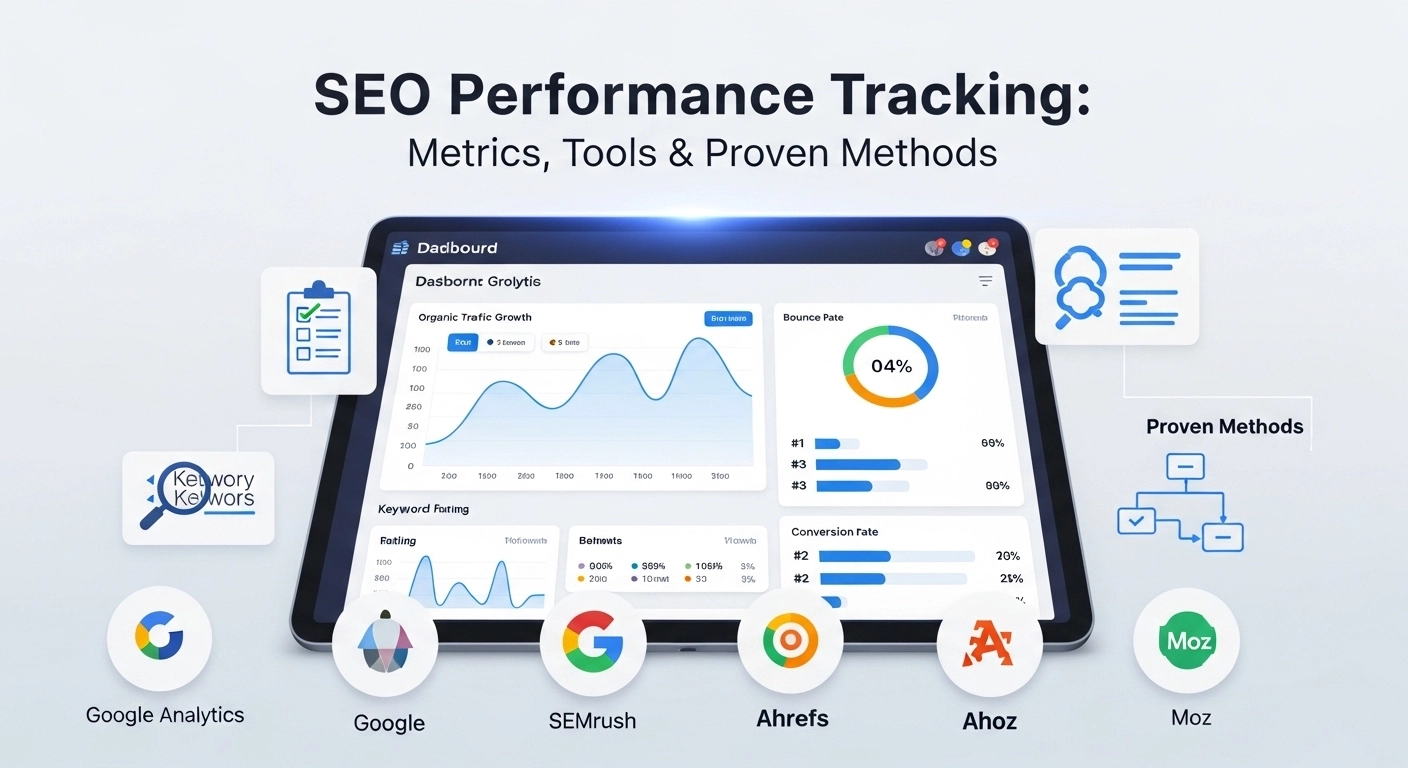
Understanding SEO agency SEO performance tracking is essential for anyone investing in online growth. It’s not enough to hire an agency or publish content—you need clear visibility into what’s working, what’s not, and how your website is progressing over time.
This guide explains how performance tracking works, which metrics matter most, and how to evaluate real results. Whether you’re a business owner, marketer, or beginner, you’ll learn how to confidently measure success and make smarter decisions.
Quick Answer
SEO agency SEO performance tracking is the process of measuring how well a website performs in search results using data like rankings, traffic, conversions, and user behavior. It helps businesses evaluate progress, identify opportunities, and improve results over time.
Table of Contents
- What is SEO Agency SEO Performance Tracking?
- Why Performance Tracking Matters
- Key Metrics You Should Track
- Essential Tools for Tracking Performance
- How SEO Agencies Track Performance Step-by-Step
- How to Interpret SEO Data Correctly
- Common Mistakes to Avoid
- Tips to Improve SEO Performance
- FAQ
- Conclusion
What is SEO Agency SEO Performance Tracking?
SEO agency SEO performance tracking refers to the structured process of analyzing how a website performs in search engines over time. It involves collecting and reviewing data to understand:
- Website visibility
- Traffic trends
- User engagement
- Conversion performance
Instead of guessing, performance tracking provides real, measurable insights that guide decisions and strategy.
Why Performance Tracking Matters
Without tracking, you’re operating blindly. Performance tracking ensures that every effort leads to measurable improvement.
Key Benefits
- Helps identify what strategies are working
- Shows areas that need improvement
- Tracks return on investment (ROI)
- Supports data-driven decision-making
- Builds transparency between agencies and clients
Real Example
Imagine publishing 20 blog posts but seeing no traffic growth. Without tracking, you wouldn’t know whether the issue is poor keyword targeting, weak content, or technical problems. Tracking reveals the exact cause.
Key Metrics You Should Track
Not all data is useful. Focus on metrics that reflect real performance and growth.
1. Organic Traffic
This shows how many visitors come from search engines.
- Indicates visibility
- Helps measure content success
2. Keyword Rankings
Tracking keyword positions shows how your pages perform in search results.
- Monitor improvements or drops
- Identify high-potential keywords
3. Click-Through Rate (CTR)
CTR measures how many users click your link after seeing it.
- Higher CTR = better titles and descriptions
- Low CTR = need for improvement
4. Bounce Rate
Bounce rate shows how many users leave without interacting.
- High bounce rate may indicate poor content or slow loading
5. Conversion Rate
This is one of the most important metrics.
- Tracks leads, sales, or sign-ups
- Shows real business impact
6. Backlinks
Backlinks signal authority and trust.
- More quality links = stronger rankings
- Helps build credibility
Essential Tools for Tracking Performance
Professional tracking relies on reliable tools that provide accurate data.
Popular Tools Used by Agencies
- Google Analytics – Tracks traffic and user behavior
- Google Search Console – Monitors search visibility
- SEMrush – Tracks rankings and competitors
- Ahrefs – Backlink and keyword analysis
These tools provide a complete view of performance across different areas.
How SEO Agencies Track Performance Step-by-Step
A structured process ensures accurate and consistent tracking.
Step 1: Set Clear Goals
Define what success looks like:
- More traffic
- Higher rankings
- Increased conversions
Step 2: Identify Key Metrics
Choose metrics aligned with your goals.
Example:
- Traffic → Organic sessions
- Sales → Conversion rate
Step 3: Set Up Tracking Tools
Install analytics and tracking systems properly.
Step 4: Monitor Data Regularly
- Weekly checks for trends
- Monthly reports for progress
Step 5: Analyze and Adjust
Use insights to improve strategy.
- Update content
- Fix technical issues
- Improve targeting
How to Interpret SEO Data Correctly
Data alone is not enough—you must understand it.
Look for Trends, Not Just Numbers
- A single drop in traffic may not matter
- Long-term patterns are more important
Compare Time Periods
- Month-over-month growth
- Year-over-year comparison
Focus on Business Outcomes
Traffic is useful, but conversions matter more.
Example:
- 1,000 visitors with no sales = weak performance
- 200 visitors with 20 sales = strong performance
Common Mistakes to Avoid
Many businesses misunderstand performance tracking.
Avoid These Errors
- Focusing only on rankings
- Ignoring conversions
- Checking data too frequently
- Not setting clear goals
- Misinterpreting short-term changes
Tracking should be consistent and focused on meaningful results.
Tips to Improve SEO Performance
Once you track performance, the next step is improvement.
Practical Strategies
- Update outdated content
- Improve page speed
- Target long-tail keywords
- Build quality backlinks
- Optimize for mobile users
Content Improvement Tips
- Answer real user questions
- Add clear structure (headings, lists)
- Include examples and practical advice
FAQ
1. How often should SEO performance be tracked?
Performance should be monitored weekly and analyzed monthly for better insights.
2. What is the most important SEO metric?
Conversion rate is the most important because it reflects real business results.
3. Can I track SEO performance without tools?
Basic tracking is possible, but tools provide accurate and detailed insights.
4. How long does it take to see results?
Most improvements become noticeable within 3 to 6 months, depending on competition.
5. What should I do if performance drops?
Analyze the data, identify the cause, and adjust your strategy accordingly.
Conclusion
SEO agency SEO performance tracking is the foundation of successful online growth. It turns guesswork into clear, data-driven decisions that help improve visibility, traffic, and conversions.
By focusing on the right metrics, using reliable tools, and consistently analyzing performance, businesses can achieve sustainable growth. Whether you’re working with an agency or managing your own website, tracking performance ensures that every effort moves you closer to your goals.
Start tracking today, and you’ll gain the clarity needed to make smarter, more effective decisions for long-term success.

Best known for The Great Gatsby, Fitzgerald captured the essence of the “Jazz Age” in America. His writings focus on love, dreams, and the pursuit of success. Fitzgerald’s elegant words are perfect for romantic and classy captions.