
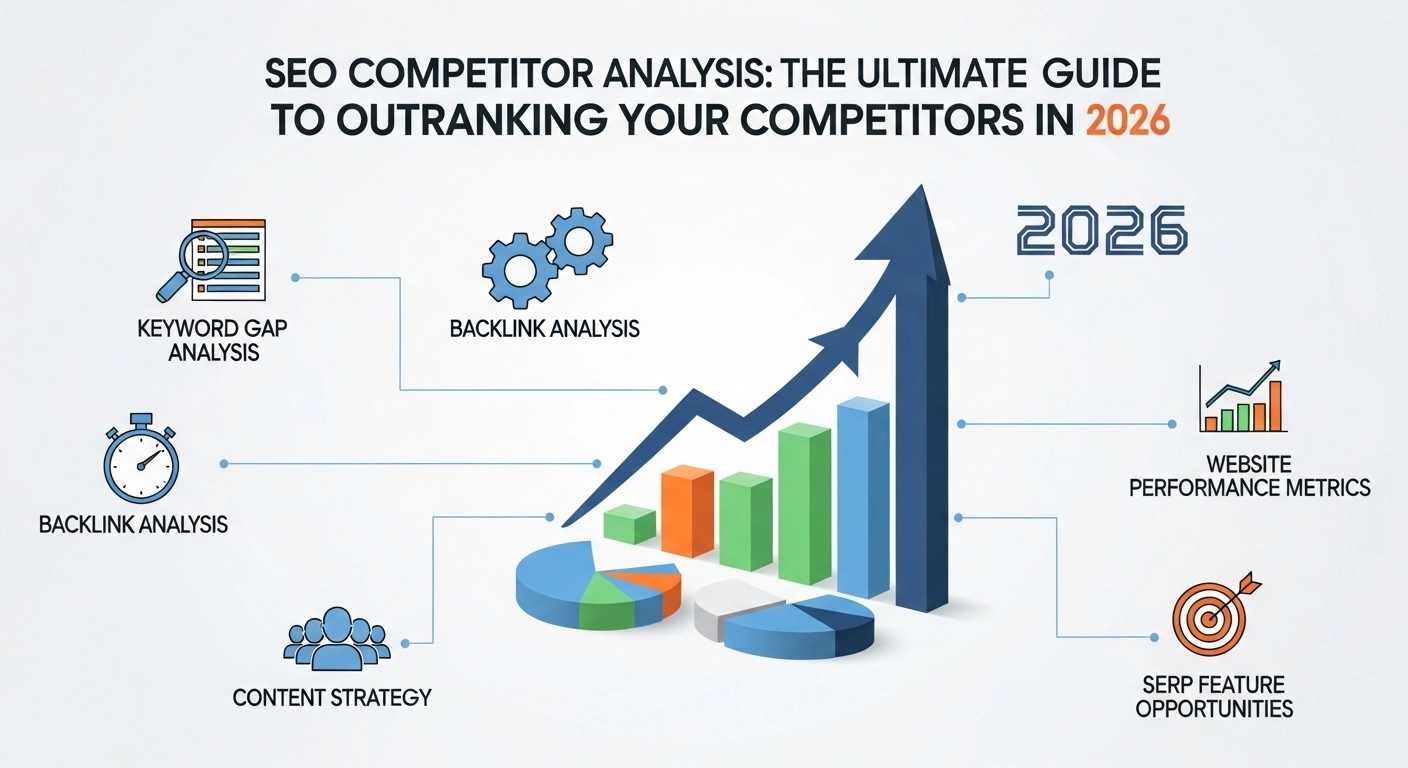
In today’s highly competitive digital landscape, SEO competitor analysis is no longer optional—it’s essential. Businesses that understand what their competitors are doing online gain a powerful advantage in search engine rankings. By analyzing competitors’ keywords, backlinks, content strategies, and technical SEO, you can uncover hidden opportunities and outperform them on Google.
This article will guide you through everything you need to know about SEO competitor analysis, including its benefits, proven strategies, tools, and common mistakes to avoid. Whether you’re a beginner or an experienced marketer, mastering SEO competitor analysis can significantly boost your website traffic, visibility, and conversions.
What Is SEO Competitor Analysis?
SEO competitor analysis is the process of evaluating your competitors’ SEO strategies to identify strengths, weaknesses, and opportunities. It involves analyzing:
- Keywords they rank for
- Backlink profiles
- Content performance
- On-page SEO
- Technical SEO factors
The goal is simple: learn what works for them and do it better.
Benefits of SEO Competitor Analysis
Identify High-Performing Keywords
By studying competitors, you can discover keywords already driving traffic in your niche. This helps you target terms with proven demand.
Uncover Content Gaps
Find topics your competitors haven’t covered or haven’t done well—these are your opportunities to rank faster.
Improve Backlink Strategy
Analyzing backlinks helps you identify quality link-building opportunities to boost domain authority.
Enhance SEO Strategy
You gain insights into what Google rewards in your niche, allowing you to refine your approach.
How SEO Competitor Analysis Improves Online Visibility
Keyword Optimization
Competitor research reveals which keywords bring traffic. You can optimize your content around these keywords to rank higher.
Content Strategy Development
By reviewing top-performing content, you can create more valuable, in-depth, and engaging articles.
Technical SEO Improvements
Competitor sites often highlight what works technically—like page speed, mobile optimization, and site structure.
Better User Experience
Understanding competitor UX helps you design a more user-friendly website, improving dwell time and reducing bounce rates.
Best Strategies for SEO Competitor Analysis
H3: Analyze Competitor Keywords
Use tools like:
- Ahrefs
- SEMrush
- Ubersuggest
Focus on:
- High-volume keywords
- Low-competition opportunities
- Long-tail keywords
H3: Study Top-Performing Content
Look at:
- Blog posts ranking on page 1
- Content length and structure
- Use of visuals and media
Then create better, more comprehensive content.
H3: Evaluate Backlink Profiles
Check:
- Number of backlinks
- Quality of referring domains
- Anchor text distribution
Aim to replicate and improve their link sources.
H3: Monitor Competitor Rankings
Track how competitors rank over time to identify trends and seasonal opportunities.
H3: Perform Content Gap Analysis
Find keywords your competitors rank for—but you don’t—and create content targeting those gaps.
Common Mistakes in SEO Competitor Analysis
Ignoring Smaller Competitors
Sometimes smaller websites rank better due to niche authority—don’t overlook them.
Copying Instead of Improving
Never just copy competitor strategies. Always aim to create better content.
Focusing Only on Keywords
SEO is more than keywords—consider UX, backlinks, and technical SEO.
Not Updating Analysis Regularly
SEO changes constantly. Competitor analysis should be ongoing.
Overlooking Search Intent
Ranking depends on matching user intent, not just keywords.
FAQ: SEO Competitor Analysis
Q: What is SEO competitor analysis?
SEO competitor analysis is the process of evaluating competitors’ SEO strategies, including keywords, backlinks, and content, to improve your own rankings. It helps identify opportunities and gaps in your strategy for better performance.
Q: Why is SEO competitor analysis important for businesses?
It allows businesses to understand what works in their industry, uncover new opportunities, and stay ahead of competitors. This leads to higher rankings, more traffic, and increased revenue.
Q: How long does SEO competitor analysis take to show results?
Results can take a few weeks to several months depending on implementation. SEO is a long-term strategy, but insights from competitor analysis can provide quick wins.
Q: What are the best strategies for SEO competitor analysis?
The best strategies include keyword research, backlink analysis, content evaluation, and identifying content gaps. Using SEO tools also improves accuracy and efficiency.
Q: Is SEO competitor analysis worth it for small businesses?
Yes, it’s highly valuable. Small businesses can identify low-competition keywords and niche opportunities to compete with larger brands effectively.
Q: Which tools are best for SEO competitor analysis?
Popular tools include Ahrefs, SEMrush, Moz, and Ubersuggest. These tools help analyze keywords, backlinks, and competitor performance.
Conclusion
SEO competitor analysis is one of the most powerful ways to improve your search rankings and online presence. By understanding what your competitors are doing—and doing it better—you can gain a significant edge in your niche.
From keyword research to backlink analysis and content optimization, every insight you gather helps refine your strategy. If you consistently apply these techniques, SEO competitor analysis will drive long-term growth, higher visibility, and increased conversions for your business.

Best known for The Great Gatsby, Fitzgerald captured the essence of the “Jazz Age” in America. His writings focus on love, dreams, and the pursuit of success. Fitzgerald’s elegant words are perfect for romantic and classy captions.